
How to Check Image Metadata for AI Images
Learn how to inspect image metadata, software tags, and Content Credentials, and understand what they can and cannot reveal about AI images.
Read the guide →Practical guides for investigating AI-generated and manipulated media.
Learn how to inspect image metadata, software tags, and Content Credentials, and understand what they can and cannot reveal about AI images.
Read the guide →
Learn how to check a travel photo's source, location and original file, and separate AI clues from proof before you trust a destination image.
Read the guide →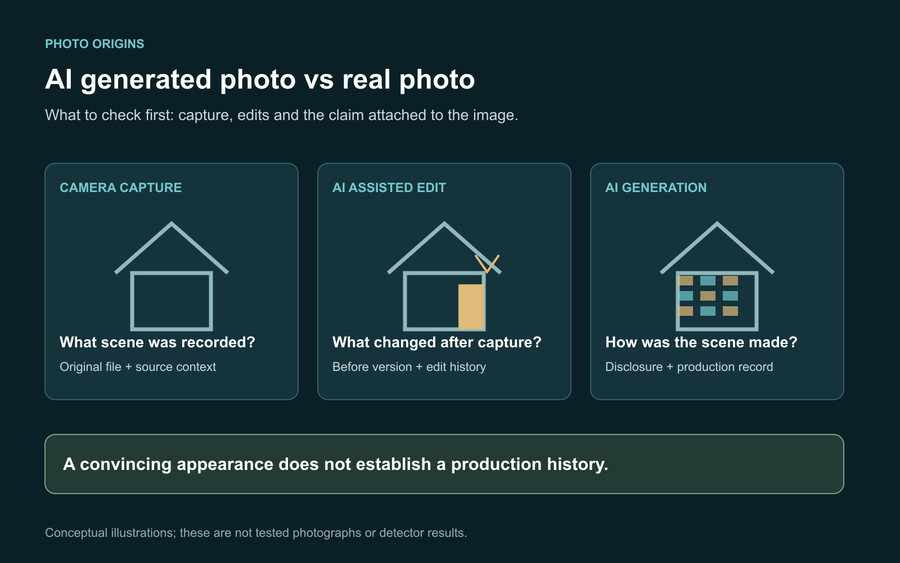
Compare an AI generated photo with a real photo using source history, editing records and file evidence. Learn which clues matter and which can mislead.
Read the guide →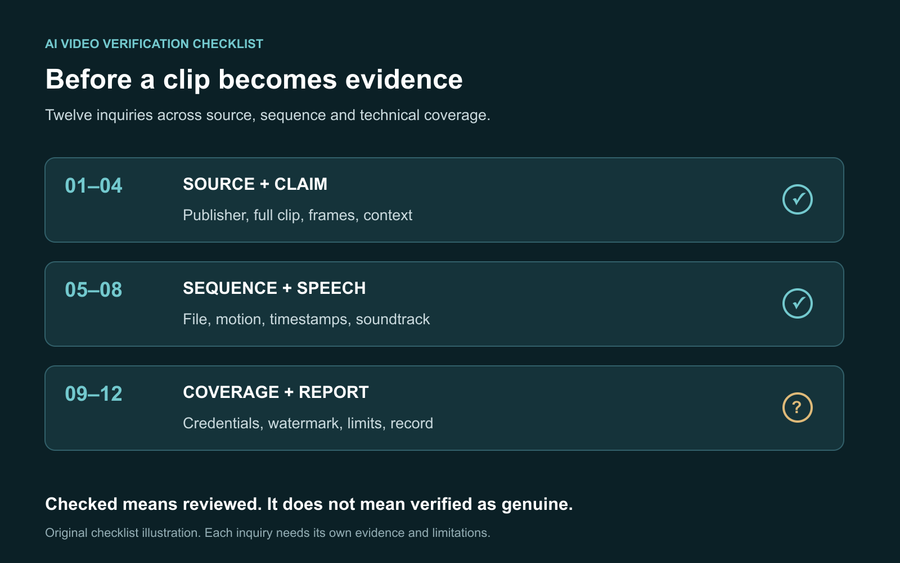
Use an AI video verification checklist to review source, context, motion, audio and detector coverage before sharing a clip. Keep a clear evidence record.
Read the guide →A practical workflow for an inconclusive AI image scan: check coverage, preserve the original, inspect credentials and watermarks, and document source context.
Read the guide →Interpret C2PA checker statuses, signer trust and AI declarations, then record a clear evidence note without confusing provenance with proof of authenticity.
Read the guide →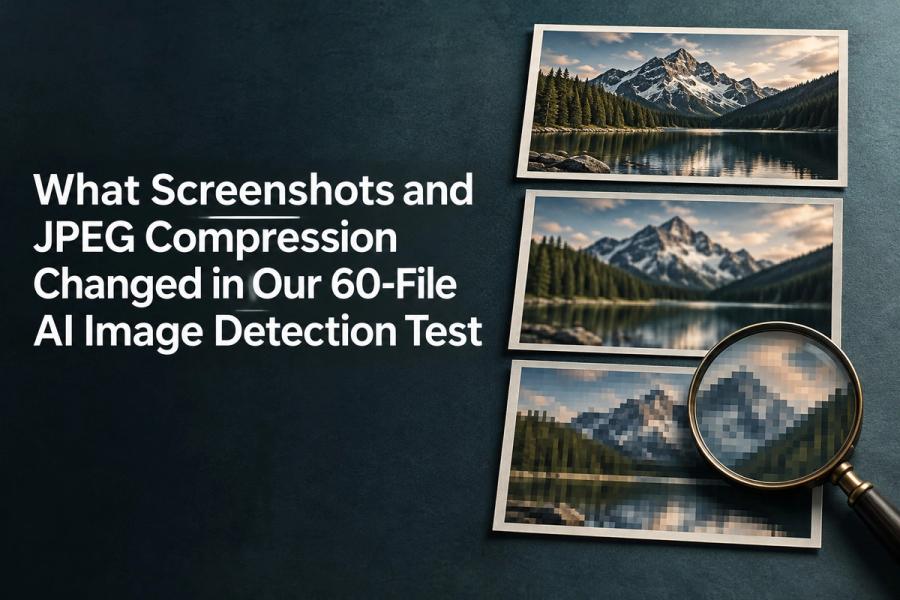
A reproducible 12-source, 60-file case study of screenshots, resizing, JPEG compression, metadata re-encoding, C2PA credentials and visual model outputs.
Read the guide →
Compare AI image detection, C2PA validation and SynthID verification by evidence type, privacy, access and result limits.
Read the guide →
Check SynthID using the official Detector or Gemini image workflow. Understand media coverage, file versions and provider-specific verification.
Read the guide →
Learn what C2PA Content Credentials record, how signatures and asset bindings are verified, and what valid or missing credentials can—and cannot—prove.
Read the guide →
Learn what a deepfake is, how it differs from broader AI-generated content, the main manipulation types, and how to verify suspected impersonation.
Read the guide →
Learn why AI detectors produce false positives and false negatives, how compression and model mismatch affect results, and how to review a disputed flag.
Read the guide →